
Why Travelers Are Ditching Plastic SIMs
Unlock Global Connectivity With the Best eSIM Data Plan for Travelers
Imagine landing in a new country and instantly connecting to a local network without swapping a physical SIM card. An eSIM data plan is a digital profile you download directly onto your compatible phone, activating service through a simple QR code or app. This eliminates the need for plastic cards and lets you manage multiple plans, like keeping your home number active while adding a cheap local data package. The effortless activation means you can buy, install, and start using data in just a few minutes, entirely from your device.
Why Travelers Are Ditching Plastic SIMs
Travelers are ditching plastic SIMs because eSIM data plans eliminate the frantic hunt for a local vendor after landing. You buy and activate a plan online before departure, getting instant connectivity, not a fragile physical card to juggle. The core convenience is immediate activation without physical swapping. Q: Why ditch the plastic? A: Because losing or damaging that tiny SIM card in a foreign country is a travel crisis that eSIM data plans completely eliminate, allowing you to switch networks in seconds from your phone settings.
The Shift from Physical Cards to Embedded Chips
The shift from physical cards to embedded chips eliminates the need for fumbling with tiny plastic SIMs when switching carriers or traveling. An embedded chip, soldered directly onto a device’s motherboard, stores multiple profiles for eSIM data plans, allowing instant activation without waiting for a mailed card. This hardware integration means travelers can pre-download a local plan before departure, avoiding airport kiosks or damaged nano-SIMs. The transition also frees up the physical SIM slot for a secondary backup card if needed. Remote provisioning further simplifies switching: users scan a QR code or tap an app to load a new profile, bypassing the logistics of physical exchange.
Q: Does an embedded chip require a specific device type to work?
A: Yes, only recent smartphones, tablets, and smartwatches with eSIM support—like the iPhone XS or later and Google Pixel 3+—can use this embedded tech, so check compatibility before buying a plan.
How Instant Connectivity Changes Trip Planning
Instant connectivity via eSIM fundamentally shifts trip planning from rigid schedules to fluid decision-making. Travelers no longer need to pre-load maps or book every restaurant days in advance, as they can search for spontaneous local discoveries the moment they land. This immediacy allows for dynamic itinerary adjustments based on real-time weather or crowd levels, turning a planned route into an adaptable adventure. You can now confidently explore an unmarked alley because a local recommendation populates instantly, erasing the fear of losing your way. The ability to activate data before departure and switch profiles on arrival eliminates the entire pre-trip chore of sourcing physical SIMs, making the planning process leaner and more responsive to opportunity.
Key Distinctions Between Digital and Traditional Options
The key distinction hits you when your flight lands: with a traditional SIM, you’re scrambling to find a store or vending machine, peeling your phone case off, and juggling a tiny card. With an eSIM data plan, you simply scan a QR code from your email while still taxiing, and your signal flicks on before you reach baggage claim. Another difference shows up on a trip with two countries: a physical SIM locks you into one provider, forcing you to swap or buy a new card at each border. A digital eSIM lets you install multiple profiles, buying a local data package for each nation without ever opening your SIM tray.
Q: What is the biggest practical difference when you lose your phone? A: With a traditional SIM, your number and data are gone until you get a replacement card; with an eSIM data plan, you can remotely transfer your profile to a new device, restoring service in minutes. That digital control removes the frantic hunt for a physical card dealer.
Comparing Activation Times and Setup Steps
The most immediate distinction lies in activation speed: a traditional SIM card requires physical delivery and manual insertion, causing delays of hours to days, whereas an eSIM data plan activates in under five minutes via a QR code or app. Setup steps follow a similar divergence. Traditional SIMs need finding the tray, ejecting it, and handling a tiny chip. Conversely, eSIM setup involves scanning a code or installing a profile from a provider’s interface, bypassing physical handling entirely. This process, known as instant digital provisioning, eliminates the need to store or swap cards. The logical consequence is that eSIM users can switch plans or connect upon arrival without prior hardware logistics. Q: What is the fastest activation method? The eSIM data plan, requiring only a download and QR code scan, activates in minutes versus a traditional SIM’s days for delivery and insertion.
Physical Card vs. Digital Profile: Storage and Switching
A physical SIM card is a tiny chip you must store safely and physically swap between devices, which risks losing it. In contrast, an eSIM’s digital profile lives entirely on your phone’s internal memory, letting you switch carriers or plans in seconds via a settings menu—no fumbling with trays. For switching, the eSIM supports multiple profiles stored simultaneously, so you can toggle between a travel data plan and your home line without ejecting anything. Digital profile storage eliminates the need to carry a spare SIM, reducing clutter and the risk of misplacing your connectivity.
| Aspect | Physical SIM Card | eSIM Digital Profile |
|---|---|---|
| Storage | Requires a physical slot; easy to lose | Stored on device chip; clutter-free |
| Switching | Must remove/reinsert card or use a SIM tool | Change profile in phone settings instantly |
| Multiple Plans | One card per slot; swapping deactivates | Several profiles loaded; toggle as needed |

Choosing the Right Mobile Data Package for Your Device
Choosing the right eSIM data plan for your device starts with verifying your smartphone supports eSIM technology, as not all models do. Assess your typical monthly usage: light users needing only maps and messages benefit from small, low-cost packages, while heavy streamers or remote workers require high-capacity plans with throttle-free speeds. Prioritize plans offering flexible top-ups or pause features to avoid waste. For multi-country travel, select a regional eSIM data plan that auto-connects to local networks, eliminating roaming surcharges. Always confirm plan terms—daily caps or fair usage policies can cripple performance. A matching eSIM data plan aligns your device’s capabilities with your actual connectivity needs, never the other way around.
Compatibility Checks: Which Phones Support Embedded Profiles
Before buying an eSIM data plan, you must check if your phone supports embedded profile compatibility. Most recent flagship models like the iPhone XS and newer, Google Pixel 3a and newer, Samsung Galaxy S20 and newer, and all Apple Watch Series 3 and later work. However, not every Android phone—especially budget models or those sold in certain regions—supports this. Look in your phone’s settings for “Add eSIM” or a similar option. If it’s missing, your device likely lacks the required hardware. Always verify with your carrier’s list first to avoid buying a plan you cannot use.
Regional Plans, Global Passes, and Pay-as-You-Go Structures
When selecting an eSIM, the choice between Regional Plans, Global Passes, and Pay-as-You-Go Structures hinges on travel frequency and coverage needs. A regional plan bundles multiple neighboring countries into one fixed-price package, ideal for a trip through Europe or Southeast Asia. A global pass provides wider, often single-destination coverage across continents at a premium, suitable for multi-leg world travel. Pay-as-you-go structures let you purchase discrete data top-ups without commitment, avoiding unused data waste for light or unpredictable usage. Structuring your choice around actual destination clusters rather than theoretical maximum coverage optimizes cost per megabyte.
| Aspect | Regional Plan | Global Pass | Pay-as-You-Go |
|---|---|---|---|
| Coverage | Grouped countries (e.g., 30 EU nations) | Multiple continents or worldwide | Single country or specific network |
| Commitment | Fixed data volume within set period | Fixed data volume, often shorter validity | No fixed term; use until depletion |
| Best For | Regional road trips or border hopping | Long-haul trips with varied stops | Quick layovers or topping off existing data |

Cost Benefits of Going Digital for International Roaming
Stuck at the Brussels airport, Sarah hesitated before buying a local SIM, knowing the €15 fee barely covered a weekend. Instead, she tapped her phone and activated an eSIM data plan. Instantly, she saw the cost benefit: a €30 global data pass replaced three separate €20 regional SIMs, saving her €30 on that trip alone. No physical card meant zero courier fees or wasted plastic, and she skipped the classic €5-per-day roaming fee by comparing plans in seconds at her gate. That digital switch turned her €60 roaming nightmare into a €30 seamless experience, freeing funds for a good Belgian meal.
Sidestepping Expensive Carrier Rates and Hidden Fees
An eSIM data plan directly sidesteps expensive carrier rates by allowing you to purchase local or regional data packages before or during travel, avoiding your home provider’s roaming markups. This eliminates hidden international roaming fees such as daily connection charges, per-megabyte overage rates, and surprise billing for background data. You choose transparent, upfront pricing for only the data you need, with no contracts or activation fees. Q: How does sidestepping carrier rates prevent hidden fees? A: You bypass your home carrier’s complex billing structures entirely, paying a fixed price for a predefined data allowance, which eliminates any unexpected charges from roaming partners or undisclosed administrative surcharges.
Comparing Prepaid Digital Offers Across Providers
When comparing prepaid digital offers across providers for an eSIM data plan, focus first on per-gigabyte cost for your target region, as prices vary significantly between local and global plans. Then, assess data validity periods—some providers offer 7-day passes versus 30-day plans at similar prices. Check if the plan includes unlimited data at throttled speeds after a high-speed cap, which affects streaming and navigation. Finally, compare multi-country bundle flexibility: some eSIMs let you top up with add-ons, while others require a new plan entirely. To systematically evaluate options:
- List your destination countries and trip duration.
- Filter providers by coverage for those exact locations.
- Compare price per GB and validity length side-by-side.
Practical Steps to Activate and Manage a Virtual Connection
To activate an eSIM data plan, first ensure your device is unlocked and connected to Wi-Fi. Scan the QR code provided by your carrier during purchase, or manually enter the activation details (SM-DP+ address and activation code) in your device’s cellular settings. After installation, label the plan (e.g., “Travel Data”) and set it as the default for cellular data if using dual SIMs. To manage the virtual connection, monitor usage via your device’s network settings or the carrier’s app, and toggle the line on/off to control connectivity. Always disable data roaming unless actively using the plan to avoid unexpected charges. Delete the eSIM profile after travel from the same menu to free storage space. A temporary pause of the line is possible through settings, though not all carriers support this feature.
Scanning QR Codes and Installing Remote Profiles
Scanning a QR code from your eSIM provider initiates profile download; your device then prompts you to install the remote profile to configure the network. This process requires an active Wi-Fi connection, as the profile is fetched during scanning. Installing remote eSIM profiles is irreversible for that QR code, so ensure you scan the correct code before proceeding. After installation, the profile appears as a new cellular plan, which you can label and switch between manually. A failed installation often stems from a poor internet connection during the initial scan, not an invalid QR code. Q: Can I reuse a scanned QR code for reinstallation? A: No, once installed, the QR code is tied to that single activation and cannot be reused. To reset, you must obtain a new QR from your provider.
Juggling Multiple Numbers on a Single Handset
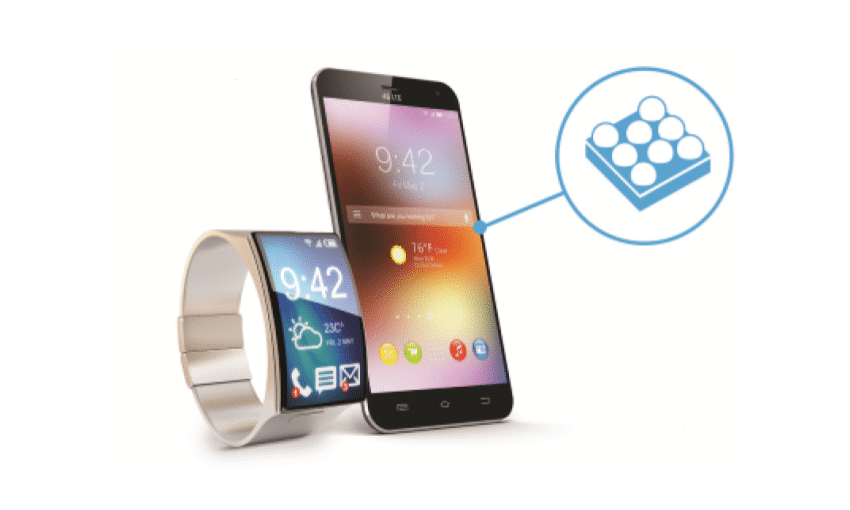
To juggle multiple numbers on a single handset, activate each eSIM data plan profile separately in your phone’s settings, usually under “Cellular” or “Mobile Data.” Dual eSIM management lets you assign distinct labels (e.g., “Work” or “Travel”) to each line for instant recognition. You can designate a primary line for data and another for calls, while keeping all numbers reachable. Switching between profiles takes just a tap, but remember to turn off the inactive line to prevent unintended data usage.
- Label each eSIM profile clearly to avoid confusion when selecting an active line.
- Set one primary number for default voice and another for data to split costs.
- Disable unused profiles temporarily to conserve battery and avoid accidental charges.
- Use the “Call Forwarding” feature to link all numbers to your primary line.
Top Use Cases for Remote Provisioning
The biggest win for remote provisioning with an eSIM data plan is instant connectivity when traveling. You land in a new country, scan a QR code or tap in an app, and you’re live—no hunting for a local SIM store. Another top use case is managing multiple mobile numbers on one device. Freelancers and digital nomads swap between work and personal eSIM data plans without swapping physical SIMs. If your physical SIM gets lost or breaks, remote provisioning lets you instantly download a backup eSIM data plan instead of waiting for a replacement card. Finally, IoT devices like smartwatches or tablets stay connected independently, since you can remotely activate their data plan without ever touching a menu.
Short-Term Travel, Business Trips, and Student Stays Abroad
For short-term travel, business trips, and student stays abroad, an eSIM data plan is a lifesaver. You land, turn on your phone, and you’re online instantly—no hunting for local SIM cards or dealing with roaming fees. A business traveler can hop from a conference in Berlin to a client meeting in Tokyo without switching providers. Students studying abroad for a semester stay connected with family and use local apps for maps and ride-sharing right away. Instant connectivity abroad makes it effortless. Q: Can I keep my regular number active while using an eSIM for data? A: Yes, most phones support a primary physical SIM for calls and an eSIM for data, so you don’t miss important messages from home.
Backup Internet for Extended Off-Grid Periods
For extended off-grid periods, a backup internet eSIM data plan serves as a critical lifeline, enabling essential communication and logistics when primary wired or satellite connections fail. The plan’s core utility lies in providing reliable daily data allowances for tasks like checking weather updates, sending location coordinates, or managing remote equipment. Users must prioritize plans with long validity windows—often 30 to 365 days—to avoid frequent top-ups. Data throttling after a high-speed cap is a key factor; a plan offering unlimited low-speed data after the throttle ensures continued messaging and map access. Multi-network roaming across local carriers further strengthens connectivity, automatically switching to the strongest signal in remote valleys or wooded areas.
| Plan Feature | Relevance for Off-Grid Backup |
|---|---|
| Data validity | 30–365 days minimizes management burden |
| Throttled speed | 128–256 kbps sustains messaging and navigation |
| Network coverage | Multi-carrier access reduces dead zones |
| Top-up method | App-based purchase works with low bandwidth |
Security and Reliability of Cloud-Based Connections
For an eSIM data plan, the security of cloud-based connections relies on encrypted provisioning protocols like GSMA’s eSIM Remote Provisioning, which secures the download of your profile. Reliability is governed by the cloud’s ability to maintain persistent, low-latency links to multiple operator networks—when one carrier’s signal degrades, the connection seamlessly shifts. A common question: Does vulnerability lie in the cloud or the device? The cloud connection is encrypted end-to-end during profile management; weak device security, like an unlocked bootloader, is the real risk. Always ensure your device enforces full-disk encryption and uses a trusted carrier’s eSIM management infrastructure for failover to cell towers, avoiding shared public Wi-Fi hotspots that can intercept data during initial activation.
Encrypted Profiles and Remote Deactivation Controls
For eSIM data plans, encrypted profiles serve as the foundational security layer, ensuring that network credentials and subscriber data remain unreadable to unauthorized parties during transmission and storage. Remote deactivation controls complement this by allowing users or providers to instantly erase a compromised or lost eSIM from the device, severing all data access. This two-tier mechanism prevents unauthorized usage if the device is stolen, because the profile itself becomes non-functional without the decryption key. The ability to deactivate a profile remotely adds a granular layer of recovery that physical SIMs cannot replicate.
- Encrypted profiles use AES-256 or equivalent to protect connection strings stored on the eSIM chip.
- Remote deactivation can be triggered from the account dashboard or via a one-time push command.
- Once deactivated, the profile cannot be reactivated; a fresh download is required for the same IMSI.
Coverage Gaps and Fallback Options When Signals Drop
Even with an eSIM, coverage gaps occur in tunnels, remote areas, or during network congestion. A primary fallback is automatic carrier switching, where the eSIM scans for alternate local networks and reconnects without manual intervention. For consistent access, pre-downloaded offline maps and caching essential data provide a reliable fallback for critical applications when live signals drop. Many providers also offer on-demand top-ups or temporary data packs that activate instantly if your primary connection fails. Q: What happens if my eSIM loses signal entirely? A: Depending on your plan, the device may fail over to a secondary embedded profile, or you can manually select a different network operator from the available list in your settings.
Future Trends in Soft-Card Internet Access
Future trends in soft-card internet access will prioritize seamless, multi-network switching within a single esim data plan. Users will benefit from plans that automatically select the strongest local carrier without manual profile changes, and eSIM profiles will dynamically adjust bandwidth for specific app types. A key development will be soft-card profiles pre-configured for low-data IoT devices, enabling direct pairing without a primary phone. Additionally, plans will support temporary, inactive safe modes that pause data billing while preserving the network slot, making the eSIM a persistent, background utility rather than an occasional purchase.
Integration with Smart Watches and IoT Devices
Integration with smart watches and IoT devices under an eSIM data plan enables a single number and data pool to be shared across multiple wearables without physical SIM swaps. A smart watch can independently stream music or take calls using the same eSIM profile, while a connected sensor or tracker maintains constant cloud sync. This setup reduces battery drain on the primary phone, as the watch handles its connectivity via the shared plan. The seamless multi-device eSIM pairing allows for assigning distinct data limits to each wearable, ensuring critical IoT devices remain online even when the phone’s quota depletes.
| Aspect | Smart Watch Integration | IoT Device Integration |
|---|---|---|
| Primary Use | Voice calls, notifications, music streaming | Sensor data relay, remote monitoring |
| Data Allocation | Shares main plan UK eSIM bucket | Often gets a dedicated quota |
| Activation Method | Instant eSIM push via companion app | Pre‑provisioned or QR scan |
| Power Management | Low‑power LTE chip | Ultra‑low standby mode |
Emerging Brands and Aggressive Pricing Models
Emerging brands in the eSIM space deploy aggressive pricing models to undercut incumbents, often offering single-country plans at 60-80% lower rates than traditional operators. They leverage zero-infrastructure costs by renting network access wholesale, passing savings directly to users. This forces dynamic pricing, where data bundles adjust real-time based on demand. For a heavy user needing 10GB for a two-week trip, these brands provide flexible, short-term plans without long commitments. Niche market undercutting is common, targeting specific destinations others ignore. How can I trust an emerging brand’s service quality with such low prices? Most employ virtual network testing and user-driven coverage maps to balance cost with performance, but always check refund policies for connectivity failures.
What Exactly Is an eSIM Data Plan and How Does It Work?
How the embedded SIM differs from a physical SIM card
The step-by-step process of activating data without a plastic card
Key Benefits of Switching to an eSIM-Only Data Service
Keeping your primary number active while using a separate data line
Instant plan switching and top-ups directly from your phone
How to Choose the Right Data Allowance for Your Travel or Daily Use
Matching plan size to streaming, navigation, and hotspot habits
Understanding fair usage policies versus truly unlimited options
Step-by-Step Setup Guide for Activating Your First Data-Only eSIM
Scanning a QR code or installing via a carrier app
Configuring default data line and APN settings on iOS and Android
Common Mistakes Users Make With Mobile Data eSIMs and How to Avoid Them
Forgetting to disable your primary line to prevent dual charges
Not checking device compatibility before purchasing a regional package
